
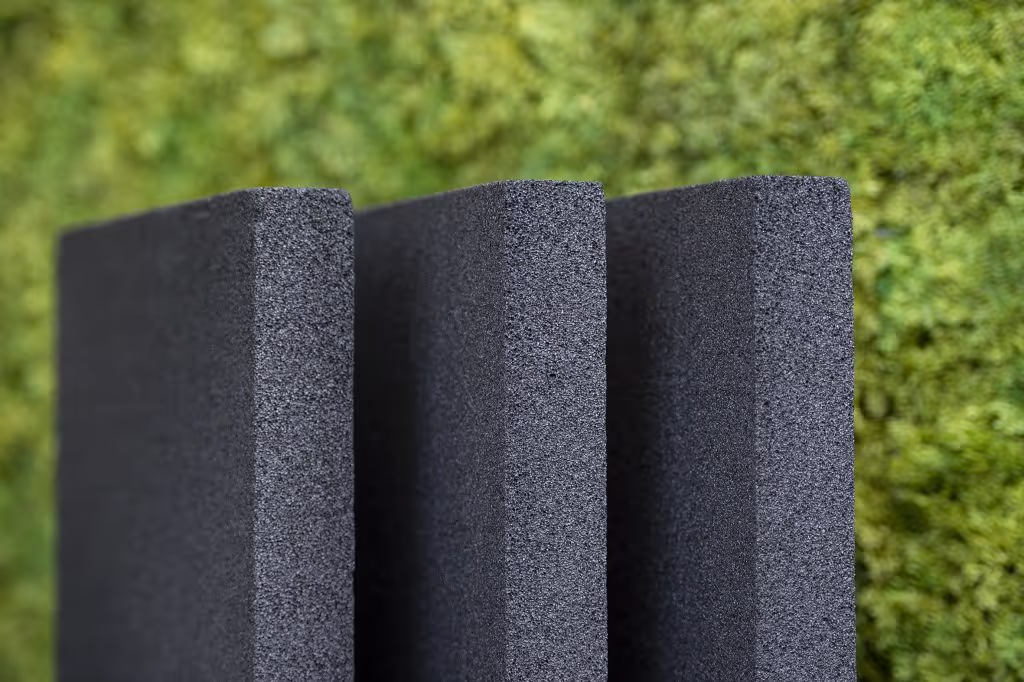
Cellular glass can be used as an alternative to polystyrene insulation.
It is made by heating a mixture of crushed or granulated glass and a blowing agent (chemical foaming agent) such as carbon or limestone. Near the melting point of the glass, the blowing agent releases a gas that produces a foaming effect in the glass. After cooling, the mixture solidifies into a rigid material with gas-filled, closed-cell pores that make up a large portion of the volume.
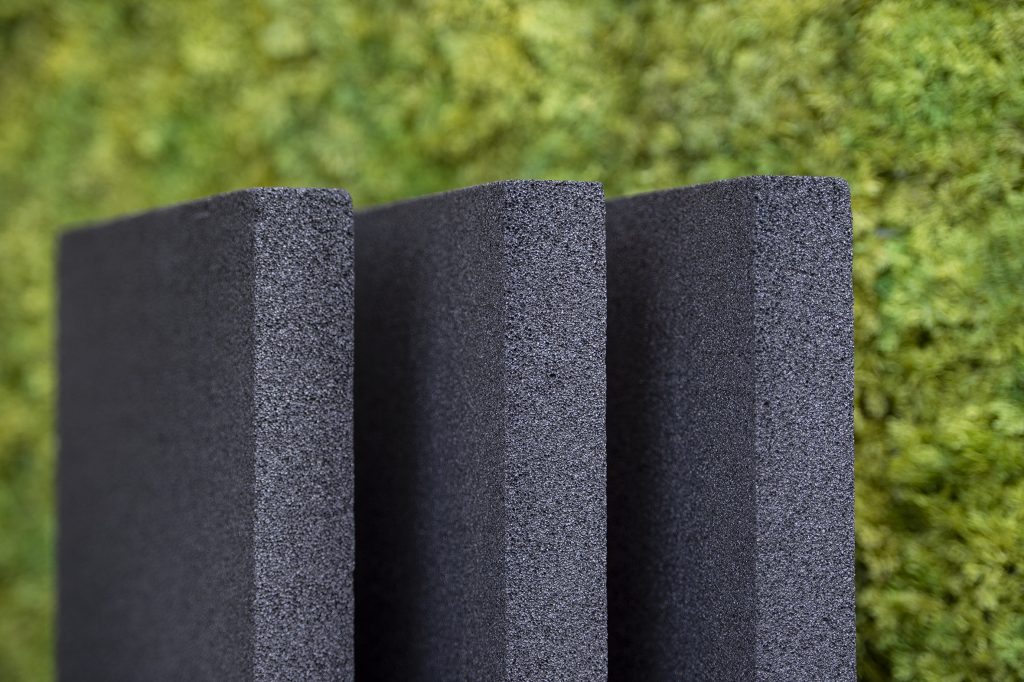
Cellular glass sheets can be used as a replacement for EPS and XPS (styrofoam) insulation products, while cellular glass granules can be used as a filler or stabilizing layer under roads and walkways, among other things.
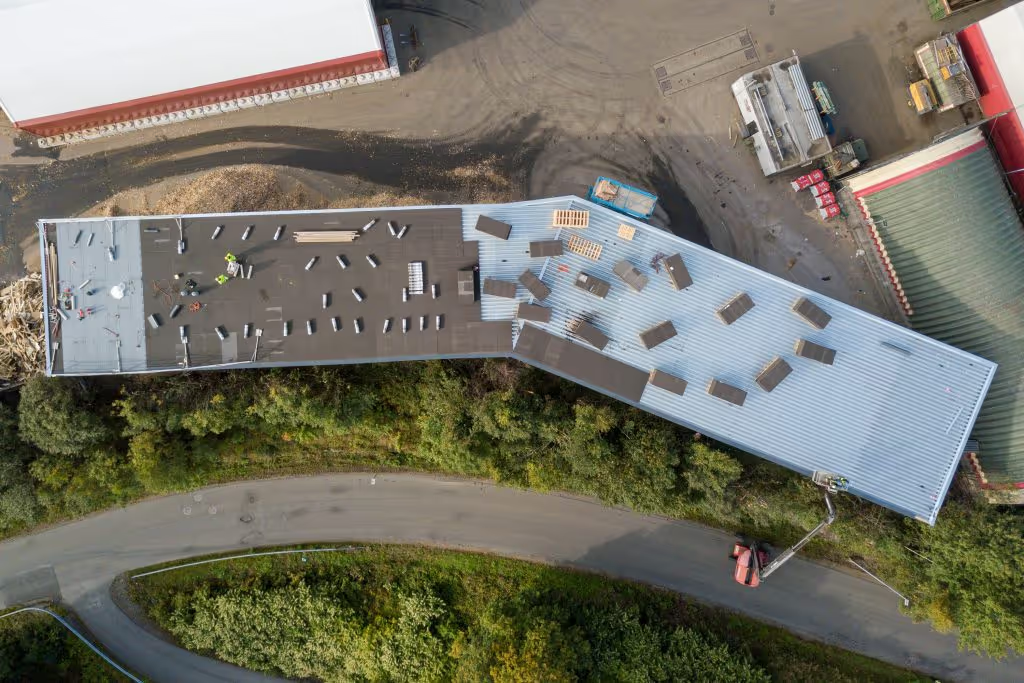
Our cellular glass panels can be supplied in sizes up to 2800mm x 1200mm, which will result in fewer joints and less air movement in the construction. They are easy to adjust using a handsaw, and unevenness is quickly and effectively sanded away with a concrete rasp. There is also a separate system of drop plates and wedges for use on roofs and terraces.
Cellular glass has many unique properties that make it suitable for projects where high demands are placed on fire, water and frost protection, while at the same time the environment and sustainability are a priority. Our cellular glass sheets do not contain substances on the priority list or other classified environmental pollutants. It is also a material that is certified to fire class A1.
Contact us today for professional solutions tailored to your project.
%20p%C3%A5%20alle%20sider_1.avif)
.svg)
.svg)
.svg)